
Dental Bridges – Denver, CO
Enjoy a Gapless Smile Once Again
Millions of Americans are missing one or more teeth. If you’re a part of that statistic, you know from experience how much it can affect your appearance and overall quality of life. Fortunately, Dr. Soltani offers high-quality dental bridges to help you enjoy a complete and fully functioning smile once again. They’ll allow you to chew, speak, and grin just like you would with natural teeth. If you’d like to learn more about this tooth-replacement solution, continue reading or give our office a call !

Why Choose Paradiso Dentistry & Orthodontics for Dental Bridges?
- High-Quality Dental Restorations
- Insurance-Friendly Dental Practice
- Experienced and Compassionate Dentist
What is a Dental Bridge?
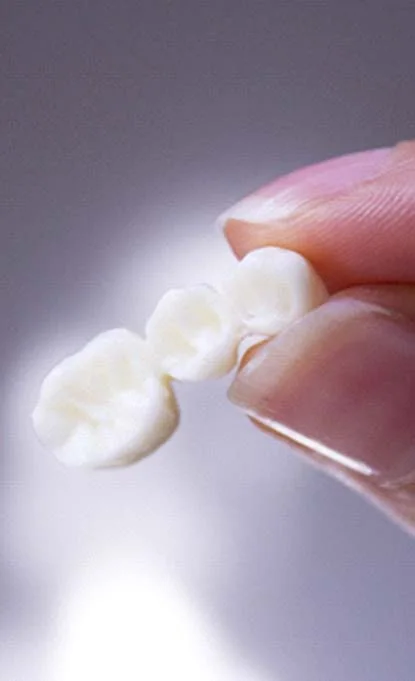
A dental bridge is a custom-made prosthetic crafted from natural-looking materials (i.e., ceramic or porcelain). Since they’re color-matched to your remaining teeth, no one will be able to tell that you have dental work in your mouth! Dental bridges are an excellent option for people missing one or more teeth. However, only those with healthy teeth on either side of the missing ones are eligible for this type of restoration.
Types of Dental Bridges
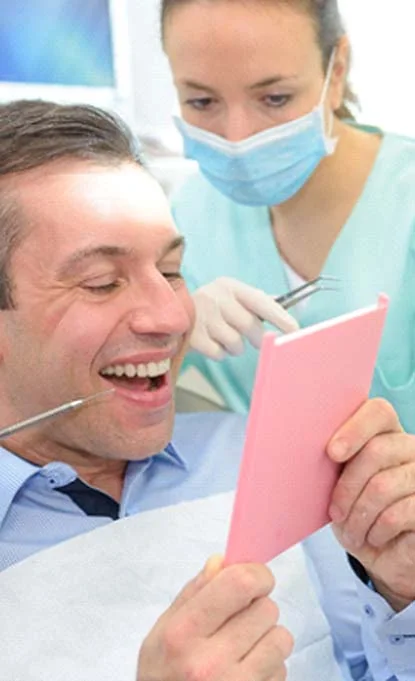
First, you’ll need a consultation with Dr. Soltani to determine whether or not this tooth-replacement solution is right for you. During this appointment, she’ll explain the different types of dental bridges and help you decide which one will work best for your smile. Based on your discussion, Dr. Soltani will recommend one of the following options:
Traditional Bridge
If you need to replace one or more consecutive teeth, your ideal solution may be a traditional dental bridge. It’s anchored to your mouth with crowns that are placed on the healthy teeth on either side of the gap. Keep in mind that this process requires the alteration of your natural teeth to replace the missing ones.
Implant Bridge
Alternatively, you can also opt for an implant bridge. It’s secured to your mouth with two dental implants instead of crowns, providing you with unmatched stability and durability. The implants are placed on either side of the gap in your smile, seamlessly closing the space. Once they’ve fused with the jawbone via osseointegration, we can attach the bridge to replace your missing teeth. Best of all, this treatment option requires no alteration of your existing teeth!

The Benefits of Dental Bridges
By choosing to replace your missing teeth with dental bridges, you can expect to enjoy several incredible benefits, including:
- Maintained alignment of your existing teeth
- Improved oral health
- Jawbone preservation with an implant denture
- Long-lasting results (up to 15 years with traditional dentures and over 35 with implant-retained)
- Natural-looking smile
- Lower maintenance
Are you ready to get rid of the gaps in your smile? Give our office a call today and schedule a consultation with Dr. Soltani!
Dental Bridges FAQs
Can You Take a Dental Bridge Out?
Unlike dentures, dental bridges are typically adhered to the teeth, meaning that they are not meant to be removed. Once they’re in, they’re in—you would need professional assistance to safely remove them.
Adding to this confusion is the fact that partial dentures are sometimes called removable bridges. Mechanically, dentures and bridges are dissimilar, and as that name would imply the main one is that bridges are affixed firmly in place.
How Long Should a Dental Bridge Last?
Your mileage may vary, but you can expect a dental bridge to last anywhere from five to fifteen years. This depends first of all on what the dental bridge is made of—metal bridges may last longer than metal-free ceramic, but they compromise a lot in aesthetics.
Moreover, your dental bridges’ lifespan depends heavily on how well you take care of them. You need to brush them twice a day and avoid bad habits that may compromise your oral health, like smoking/nail-biting/teeth grinding.
Do Dental Bridges Look Natural?
Metal-free dental bridges are made from a tooth-colored ceramic and are based on a meticulously crafted imprint of your smile. We use a tremendous amount of care in creating your restoration, as do the lab professionals who mill the final product. As a result, you can rely on your dental bridges to look completely natural.
This is aided by the fact that you don’t have to worry about your prosthetic falling out as you might in the case of a denture.
What Can You Not Eat with a Dental Bridge?
Unlike dentures, dental bridges are usually strong enough to eat just about anything that you could want to, provided that you avoid some of the most dangerous foods. Excessively sticky or gummy foods could potentially pull your dental bridge out of place, so you should be careful to avoid them. You may also want to avoid any foods that could lead to decay, like sugary candy.
That said, in terms of what you’re physically able to chew, you should be very happy with the results, especially compared to dentures.
More to Explore
Questions Denver Dental Patients Ask
How does a bridge replace missing teeth?
A bridge connects replacement teeth to supporting teeth or implants. The design is selected after evaluating the location of the gap and the health of the available support.
What is different about an implant-supported bridge?
An implant-supported bridge attaches to implants rather than prepared neighboring teeth. Placement and healing are additional planning considerations, and the practice coordinates implant surgery with an outside specialist.
Can patients remove a fixed bridge at home?
A fixed bridge is not designed for daily removal. Patients should ask for cleaning instructions suited to the restoration and contact the office if it becomes loose or uncomfortable.
Is a bridge the only option for a missing tooth?
No. Depending on the assessment, a denture or an implant-supported replacement may also be considered. The team can explain the differences before patients choose an appropriate approach.
How is a bridge maintained?
Patients should clean the supporting teeth or implants and the areas around the replacement teeth as instructed. Professional visits assess fit and the health of the tissues supporting the bridge.
Dental Bridges in Denver: Support Choices and Daily Maintenance
1. Bridge design depends on available support. The condition of nearby teeth or implants influences how a bridge can be secured.
2. Traditional bridges involve supporting teeth. Patients should understand the preparation required before choosing a conventional tooth-supported bridge.
3. Implant bridges have a different treatment sequence. Surgical coordination and healing need to be considered when implants provide the support.
4. Fixed bridges are not removed for daily cleaning. Patients need instructions for reaching the spaces around and beneath the replacement teeth.
5. Appearance is planned alongside function. The bridge should be evaluated for fit, shade, and its relationship to the patient’s bite.
6. Maintenance includes the supporting structures. Monitoring the teeth, gums, or implants supporting the bridge is part of long-term care.
Published Survival of Fixed Dental Bridges
Research findings
- Tooth-supported fixed bridges: 86% survival at 15 years. [1]
- Implant-supported fixed bridges: 93% survival at 15 years. [1]
Understanding the research
| Research outcome | Reported result | What the research measures |
|---|---|---|
| Tooth-supported fixed bridges | 86% | at 15 years Estimated survival of bridges supported by natural teeth in the study cohort. [1] |
| Implant-supported fixed bridges | 93% | at 15 years Estimated survival of fixed bridges supported by implants. This is not a removable-denture outcome. [1] |
Sources
[1] Bischof FM, Mathey AA, Stähli A, Salvi GE, Brägger U. “Survival and complication rates of tooth- and implant-supported restorations after an observation period up to 36 years.” Clinical Oral Implants Research. 2024;35(12):1640–1654. Read the full article.
These are study-specific survival estimates, not complication-free success rates. The study’s design, attrition, and small implant-bridge group limit generalization and do not establish that one treatment is superior.
A Personal Approach to Dental Bridges
“When I discuss a bridge, I explain where the support will come from and what that means for the surrounding teeth. I also review the cleaning approach, because a replacement should be planned with its daily care in mind.”
Dr. Shauna Soltani