
Orthodontics – Denver, CO
Aesthetic & Functional Enhancements to Your Smile
Dr. Soltani has over 17 years of experience and has completed additional training to provide custom-tailored orthodontic treatments for teens and adults. The great benefit of undergoing this kind of care is that it doesn’t just provide you with a straightened and more beautiful smile—orthodontics also addresses underlying causes of other oral problems, like TMJ and teeth grinding, by focusing on improving the function of your mouth. To learn whether you could benefit from orthodontics call our team to schedule a consultation today!
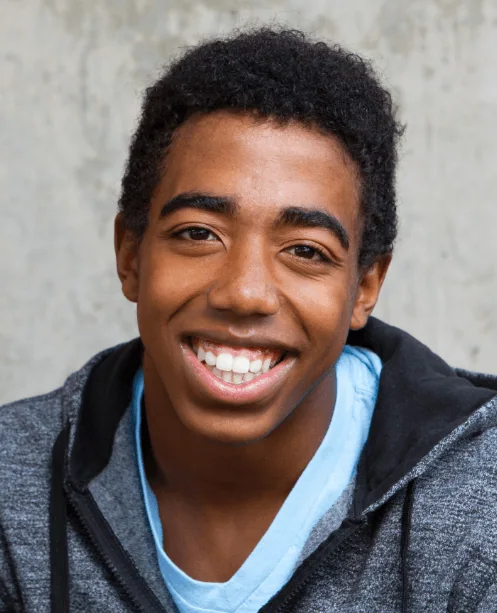
Why Choose Paradise Dentistry Denver for Orthodontics?
- Beautiful & State-of-the-Art Dental Office
- Dentistry with a Gentle Touch
- We Accept Dental Insurance
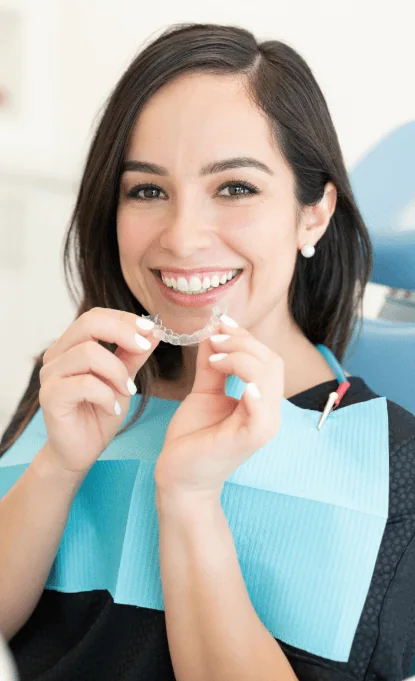
Invisalign
A more image-friendly alternative to braces, Invisalign clear trays are custom-fitted, removable aligners that you wear for 22 hours each day, only taking them out whenever you eat or clean your teeth. Every couple of weeks, you’ll switch to a new set of aligners to continue making progress throughout your treatment. Additionally, every six to eight weeks, you’ll visit Dr. Soltani for a quick follow-up appointment and to pick up the next series of trays.
More to Explore
Questions Denver Dental Patients Ask
What orthodontic treatment is listed at the practice?
The website lists Invisalign® clear aligners. Patients can request a consultation to discuss whether this approach fits their tooth-position and bite concerns and whether any other evaluation is needed.
Is orthodontic treatment only for younger patients?
Adults can also be evaluated. The suitability of treatment depends on individual dental health and the proposed movements. Existing restorations and gum conditions should be discussed before treatment planning.
Can clear aligners correct every bite problem?
No single method is appropriate for every patient. An assessment determines whether clear aligners can address the concern and whether referral or another approach should be considered.
What happens if an aligner does not fit?
Patients should contact the treating team rather than force the tray or change the sequence themselves. The dentist can assess the fit and provide instructions based on the treatment plan.
Are retainers part of orthodontic planning?
Yes. Patients should ask about retention before starting treatment. The retainer plan helps maintain the finished alignment and includes instructions for wear, care, and reporting damage or changes in fit.
Orthodontic Care in Denver: Alignment, Bite Assessment, and Retention
1. Alignment and bite are evaluated together. A tooth-position concern should be considered alongside the contact between the upper and lower teeth.
2. Adults can request an assessment. Age alone does not determine suitability; dental and supporting-tissue health are part of the evaluation.
3. Clear aligners are individually planned. The proposed tooth movements and appliance sequence are based on the patient’s examination and records.
4. Removable treatment requires participation. Patients need to follow the prescribed wear and cleaning routine and report problems promptly.
5. Follow-up checks help guide treatment. Appointments allow the dentist to review fit and progress and explain any recommended changes.
6. Retention should be discussed early. Patients should understand how retainers help maintain alignment after active treatment ends.
A Personal Approach to Orthodontics
“When I evaluate alignment, I consider more than how straight the front teeth look. I explain the bite findings, the proposed movements, and the commitment involved in wearing aligners. I also want patients to understand retention before they decide to begin treatment.”
Dr. Shauna Soltani
Patient-Reported Benefits Following Orthodontic Treatment
Patients Who Would Choose Orthodontic Treatment Again – 95%
Patients Satisfied With Their Final Esthetic Profile – 95%
Patients Reporting Their Primary Treatment Need Was Met – 92%
Patients Satisfied With Their Facial Appearance – 92.5%
Patients Satisfied With Their Overall Treatment Results – 90%
Patients Reporting Improved Social Communication – 72.5%
| Research outcome | Reported result | What the research measures |
|---|---|---|
| Patients Who Would Choose Treatment Again | 95% | would repeat treatment In a study of 59 adult orthodontic patients, 95% reported that they would choose to undergo orthodontic treatment again. |
| Satisfaction With Final Esthetic Profile | 95% | satisfied Long-term research involving nonsurgical orthodontic treatment for Class III malocclusion found that 95% of respondents were satisfied with their final esthetic profile. |
| Primary Treatment Need Met | 92% | reported their need was met In the adult orthodontic study, 92% of patients believed that the main concern that led them to seek treatment had been addressed. |
| Satisfaction With Facial Appearance | 92.5% | satisfied Among patients treated nonsurgically for Class III malocclusion, 92.5% reported long-term satisfaction with their facial appearance. |
| Satisfaction With Overall Treatment Results | 90% | satisfied The Class III orthodontic study found that 90% of respondents were satisfied with their overall treatment results 5 to 22.5 years after retention. |
| Improved Social Communication | 72.5% | reported improvement Nearly three-quarters of respondents in the Class III study believed their social communication had improved following orthodontic treatment. |
Sources: Riedmann T, Georg T, and Berg R, “Adult Patients’ View of Orthodontic Treatment Outcome Compared to Professional Assessments,” Journal of Orofacial Orthopedics, 1999; Uslu O and Akcam MO, “Evaluation of Long-Term Satisfaction With Orthodontic Treatment for Skeletal Class III Individuals,” Journal of Oral Science, 2007; Almasri AMH et al., “Patient Satisfaction Following Orthodontic Treatment: A Systematic Review,” Cureus, 2024; American Association of Orthodontists, “How Do Braces Work?”
View cited research 1 · View cited research 2 · View cited research 3 · View cited research 4