
Tooth Extractions – Denver, CO
Extract Problem Teeth for a Healthier Smile
Tooth extractions are never Dr. Soltani’s first choice, but sometimes it’s necessary to extract problem teeth for a healthier smile. While tooth replacement options will never be the same as your natural teeth, when you are experiencing severe decay, infection, or trauma to your tooth, an extraction may be what’s needed to prevent future complications. When it comes to extracting teeth, our team is committed to providing patients with a quick, comfortable procedure. To learn more about tooth extractions, read on or give us a call!

Why Choose Paradise Dentistry Denver for Tooth Extractions?
- We Prioritize Your Comfort
- Dental Saving Plan Available
- Dental Insurance Welcome

Reasons Why Tooth Extractions Are Necessary
Tooth extractions aren’t recommended lightly. If there is a chance that your tooth can be repaired and saved, we will likely first recommend a restorative treatment, like root canal therapy or a dental crown. However, a tooth extraction may be the best option for your long-term health if you have one of the following issues:
- Extensive decay or irreparable damage to the tooth.
- A severe dental infection that could spread to surrounding teeth.
- Advanced gum disease or jawbone loss.
- Wisdom teeth that need to be removed to prevent future complications.
- A baby tooth that will not fall out on its own.
The Process of Removing a Tooth
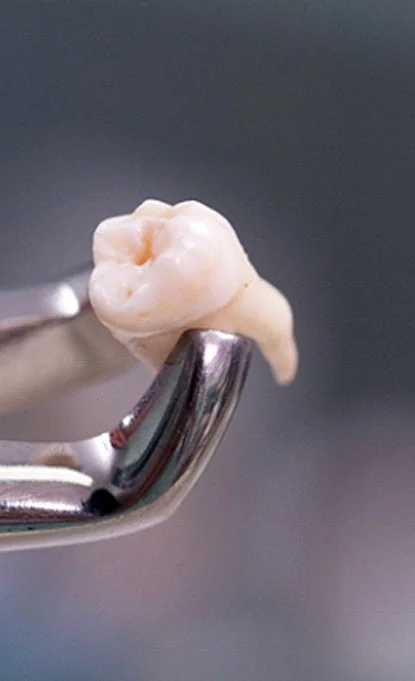
There are two different methods used for removing a tooth: simple and surgical. If the tooth needing to be extracted has fully emerged and is completely above the gumline, we are able to perform a simple extraction. First, we will numb the area and grasp the tooth with a special pair of forceps, rocking it back and forth gently until it comes out of the gum tissue. However, when the tooth isn’t fully emerged above the gumline, a surgical extraction may be necessary. For this method, we make a small incision in the gums to access more of the tooth and remove it.
To determine what type of extraction is necessary for you, if any, you will need to visit us for a consultation. This way, we can evaluate your mouth and come up with the best plan for your unique smile.

Tooth Extraction Aftercare
To ensure that your mouth heals properly and quickly, we will give you a list of specific post-op instructions to follow. Here are some common tooth extraction aftercare tips that we typically recommend to patients:
- Take recommended over-the-counter and prescribed pain relievers as directed.
- Keep the surgical site clean by brushing, flossing, and rinsing with an alcohol-free mouthwash regularly.
- Drink plenty of water to stay hydrated.
- Get plenty of rest to encourage faster healing.
- Use an ice pack or cold compress on the outside of the mouth to manage pain and swelling.
- Avoid foods that are hard, crunchy, sticky, sour, and spicy for several days.
Some swelling, discomfort, and light bleeding is normal after a tooth extraction. However, if these symptoms aren’t improving or are getting worse after several days, give us a call!
More to Explore
Questions Denver Dental Patients Ask
Why might a tooth need to be removed?
Extraction may be recommended when disease, damage, or another condition makes preservation unsuitable. The examination helps explain the reason and whether alternative treatment should be considered.
Can patients ask whether the tooth can be saved?
Yes. Patients can ask what preservation options were assessed and why extraction is recommended. The dentist can explain the findings and the limitations of possible alternatives.
What information is needed before an extraction?
Patients should share their health history and medications and follow the team’s preparation instructions. They should not change prescribed medicines independently while preparing for dental treatment.
What should patients expect during recovery?
The team provides instructions for the procedure performed, including care of the area and when to seek help. Patients should ask about eating, activity, and symptoms that require follow-up.
Can a removed tooth be replaced?
Replacement may be discussed when appropriate. The decision depends on the tooth’s location, the condition of the mouth, and the broader treatment plan, including healing and available support.
Tooth Extractions in Denver: Diagnosis, Recovery, and Replacement Planning
1. Removal requires a clear clinical reason. The dentist should explain the disease, damage, or other finding supporting the recommendation.
2. Preservation options should be discussed. Patients can ask whether restoration or other treatment could reasonably retain the tooth.
3. The extraction approach depends on the tooth. The tooth’s position and condition influence the procedure and whether additional coordination is needed.
4. Health history informs planning. Patients should disclose medications and conditions before the procedure and follow the treating team’s guidance.
5. Recovery instructions are individualized. The patient should understand care of the area and which symptoms require a call.
6. Replacement can be considered when appropriate. A removed tooth may prompt discussion of future function and suitable replacement options.
A Personal Approach to Tooth Extractions
“Before recommending an extraction, I want the patient to understand why the tooth cannot reasonably be preserved. I explain the procedure, recovery instructions, and whether replacement should be part of the next stage of care.”
Dr. Shauna Soltani
Research-Reported Patient Experience and Recovery Outcomes After Tooth Extraction
Moderate Sedation Without Anesthesia Complications – 99.5%
Deep Sedation or General Anesthesia Without Complications – 99.1%
Clinical Follow-Up Without Postoperative Complications – 98.1%
Telephone Follow-Up Without Postoperative Complications – 97.9%
Patients Satisfied With Telephone Follow-Up – 95.9%
Patients Without Complications After Dentoalveolar Surgery – 80.8%
| Research outcome | Reported result | What the research measures |
|---|---|---|
| Moderate Sedation Without Anesthesia Complications | 99.5% | complication-free A study of adolescents undergoing third-molar extraction found a 0.5% anesthesia complication rate with moderate sedation, meaning 99.5% did not experience a reported complication. |
| Deep Sedation or General Anesthesia Without Complications | 99.1% | complication-free The same study reported a 0.9% complication rate with deep sedation or general anesthesia, meaning 99.1% did not experience a reported anesthesia complication. |
| Clinical Follow-Up Without Postoperative Complications | 98.1% | complication-free Research involving third-molar removal reported a 1.9% complication rate among patients receiving clinical follow-up, meaning 98.1% did not have a reported complication. |
| Telephone Follow-Up Without Postoperative Complications | 97.9% | complication-free Patients receiving telephone follow-up after third-molar removal had a 2.1% complication rate, meaning 97.9% did not have a reported complication. |
| Patients Satisfied With Telephone Follow-Up | 95.9% | satisfied Among patients who had at least one tooth extracted, 95.9% of those receiving telephone follow-up reported that they were satisfied with this form of postoperative care. |
| Patients Without Complications After Dentoalveolar Surgery | 80.8% | complication-free In a broader extraction study, the overall complication rate was 19.2%, meaning 80.8% of patients did not experience a reported postoperative complication. |
Sources: Inverso G et al., “Complications of Moderate Sedation Versus Deep Sedation/General Anesthesia for Adolescent Patients Undergoing Third Molar Extraction,” Journal of Oral and Maxillofacial Surgery, 2016; Inverso G, Desrochers HR, Padwa BL, “The Value of Postoperative
Visits for Third Molar Removal,” Journal of Oral and Maxillofacial Surgery, 2014; Susarla SM, Black R, Dodson TB, “After Dentoalveolar Surgery, Most Patients Are Satisfied With Telephone Follow-Up,” Journal of Oral and Maxillofacial Surgery, 2011
View cited research 1 · View cited research 2 · View cited research 3